Sit down or stand up

24 Jun

I went to a great comedy show at the Punch Line this week: John Mulaney, Joe Mande, and my Twitter buddy Emily Heller. I’ve always enjoyed live comedy, but my interest has definitely grown over the past few years thanks to my Twitter addiction and comedic aspirations. For a while, the positive response I got to my jokes (or, uh, humorous observations) gave me a fleeting interest in trying stand-up. I don’t know if you guys know this, but I’ve been drawn to the stage since my third grade debut in A Symbol of Hanukkah at Temple Emanuel Community Day School.

And there’s definitely something attractive about standing in front of an audience, but the more I think about it, the more unsure I am that it’s attractive enough to get me up there. I’d be lying if I said I didn’t have aspirations of fame—as opposed to, you know, everyone else. But I’ve never really thought I was going to make a name for myself as a comedian, and at this point, even doing a little stand-up on the side isn’t on my agenda. Seeing people I admire do it only reinforces my doubts. It’s not anxiety—or it’s not just anxiety. At the end of the day, I’m a writer, not a performer.

Not that I don’t feel a little guilty: I had a pact with my friends Lisa and Charley to do an open mic. They’ve both gone for it (with gusto!) and I’m still nowhere near writing a set. I admire both of them for going through with it, and I hope they can forgive me for backing out. But I know how I would feel on stage. It’s the same way I have always felt on stage (Symbol of Hanukkah and small drama camp productions excluded): nervous, awkward, out of place. It’s the “out of place” that really gets to me. My neuroses are something I work daily to get past, and I’m confident I could suppress my shaky knees if it came to that. But I genuinely feel as though I don’t belong on stage, and that’s harder to overlook.

To be honest, I never really thought I was funny until relatively recently. (Relax, I’m not fishing for compliments. I know I am totally LOL-tastic at this point.) So isn’t it possible that while I feel like a writer now, I might feel like something else later? Maybe, but I doubt it. I’ve wanted to be a writer my entire life, save a couple years when I mostly just wanted to eat and get my diapers changed. Writing is the only thing that always makes me happy. I don’t know where I’m going to end up or what I’m going to be doing, but I’m certain it’s going to involve writing because I can’t imagine an alternative.

Of course, it’s not like writing and stand-up comedy are mutually exclusive. They’re actually pretty damn linked. But just as I believe there are born writers, I believe there are born performers. I love to make people laugh: I live for the stars and RTs I get on Twitter. (Well, not live for, because that sounds pathetic. Let’s pretend I said “appreciate.”) But perhaps that’s my venue—not Twitter, exclusively, but the written word. While I might not get the same thrill my friends get when they tell jokes on stage, I can at least feel appreciated in a (quieter) way. It’s also worth noting I can’t bomb online, though the vicious anonymous comments I get are sufficiently ego-crushing!

None of this is probably all that surprising to people who know me in real life. But since I’ve found myself lumped into some “comedians” lists on Twitter, it seemed worth addressing. I’m not a comedian, but I’m flattered by the association. I just want to write and make you laugh and, yeah, OK, make Wikipedia’s list of notable LGBT Jews. You can hold your applause.

You’re doing it wrong

21 Jun

This isn’t a review of the season finale of AMC’s The Killing. I already wrote a review for TV.com, and this site sums up my frustrations better than I ever could. But what I wasn’t able to touch on in my piece is the way some of the critical reaction really irked me—well, not the critical reaction so much as the critical reaction to the critical reaction. Still with me?

While most critics seemed to agree that The Killing finale was a colossal disappointment, some argued that it was exactly what the series needed. Fine, we can agree to disagree. But rather than just acknowledge a difference in opinion, I saw several versions of the “You weren’t watching it right” argument. I’m not even sure it can be called an argument, but the basic idea is that the reason people (myself included) didn’t appreciate The Killing‘s season finale is that we had a faulty conception of the series. More specifically, we were too consumed with the idea of determining the identity of Rosie’s killer and missed the point entirely. It’s about the journey, not the destination.

Where have I heard that before? (Outside of sex columns, that is.) Ah, yes, the contentious season finale of Lost—which, for the record, I loved. As the modern classic series approached its end and it became clear that all our burning questions weren’t going to be answered, some felt no ill will at all. Lost was always about the characters, so not knowing why women can’t have babies on the island or what the deal with Walt was or [insert your loose end of choice here] wasn’t a big deal. Others were a little more indignant: “We stuck with your roller coaster of a show for six years. You owe us some goddamn answers.” As far as I’m concerned, both sides made valid points. But nothing riled me up more than seeing critics I respected spouting the same line of bullshit: “If you’re watching Lost for the answers, you’re watching Lost wrong.”

The condescension in statements like this is obvious, but what really strikes me is the ego required. It’s “I’m right and you’re wrong” on a whole different level. If you’re convinced someone else is somehow watching a show incorrectly, you must also be sure that your manner of watching is the one, true way. How can anyone be sure of that? (I don’t even know if Damon Lindelof and Carlton Cuse would agree on the right way to appreciate Lost.) I think this is especially galling when it comes from a critic. Expressing one’s opinion is part of the job, but suggesting that said opinion is the only valid one discounts the likely diverse views of one’s readers. It is insulting to everyone’s intelligence but one’s own. And that’s kind of dickish, right?

I also hate the way this line of reasoning limits discussion. If someone is angry over The Killing finale, telling him that he simply doesn’t get it halts the conversation. How do you respond to that? The black-and-white nature of “a right and wrong way” mentality makes it impossible to find a middle ground. Not to mention the fact that it provides an easy out. Case in point: “I loved The Killing finale because I understood what the series was trying to do all along.”

Which is not to say that there is anything wrong with legitimately loving the finale! Or the Lost finale. Or any number of divisive TV episodes. I’d be a hypocrite if I said otherwise. My point is, there are always reasons to like or dislike everything, and chalking opinions up to a fundamental misunderstanding of the material is an easy and obnoxious out. Of course, this is never going to change, and there will always be critics who bug me, whether they write about TV, film, music, literature, or what have you. My goal has always been to write for a wide audience, and to sound informed without sounding like a jerk. I hope I’ve at least partially accomplished that. And if you ever hear me say that you’re watching something wrong, feel free to tell me to shove “the right way” up my ass.

Making a list, checking it twice

18 Jun

I went grocery shopping this morning because I was out of, well, everything. I used to hit up Safeway (or a more exciting supermarket) without a clear agenda: buy whatever strikes your fancy! But at some point I became the kind of person who writes out a list, and not just any list—the dullest, simplest list imaginable. I mean this isn’t even shit I need to write down. Today’s haul: plain yogurt, bananas, orange juice, frozen vegetables… I’ll spare you the rest. I surveyed my Chobani-laden bag as I left the store and I was forced to ask myself, “When did I become so boring?”

I guess the real question is, “When did I become an adult?” I fondly recall a time when I treated every grocery store excursion as a “kid in a candy store” situation. What did I buy? What didn’t I buy! I used to joke that I grabbed everything but the essentials, which wasn’t so much a joke as an accurate assessment of my purchases. Who needs milk when you can buy overpriced bottles of aloe juice? Tuna in a can is boring—go for the canned conch you’ll never eat. Instead of bananas, grab some spiky fruit you can’t figure out how to open. And remember, there’s always room for weird Japanese gelatin-based confections.

While I miss the spontaneity of my whimsical shopping adventures, I don’t exactly pine for the days when I spent $50 on a bunch of crap that was mostly inedible once the novelty wore off. I’m still not what you’d call good with money, but I’ve become way more practical and somehow that bums me out. I’m predictable. I’m calorie-conscious. I consider raspberries and nonfat vanilla Greek yogurt a treat. And yeah, part of it is dieting, but because I can’t help but overanalyze everything, I have to think about what my grocery choices mean on a larger scale. I shop the way an older person shops, with a slightly lower emphasis on bran. (Although, and don’t you fucking repeat this, I’ve gotten really into fiber.)

There are worse things than boring groceries, I guess. What really struck me about my Safeway-inspired angst was how distraught I was over feeling like an adult. I spend a lot of time reminding myself that I’m a grown-up and trying to act accordingly. I hate when people assume I’m younger than I am, or when my behavior strikes me as “very college.” But as soon as I show signs of maturity, I get all nervous, because in lots of ways, I do still want to be an idiot kid. And for some reason, I see a correlation between that and buying pepita brittle. (‘Cause, you know, kids looove pepitas.) What I’m really reacting to is the internal voice that pops up whenever I reach for something unnecessary: “No, that’s not practical. You don’t even really want it. Why spend $4 on a cracker that tastes like bird food?”

But of course, apples taste better than grapples. (Are you familiar with grapples? They are apples infused with the flavor of grapes! Their flavor can best be described as really bitter Dimetapp.) In the long-run, I am making more satisfying choices, saving money, and—ideally—avoiding hypertension. There’s nothing fun and sexy about responsibility, though. And all of this is probably just a deflection, because I don’t feel like addressing the real issue. Buying granola doesn’t make me a boring adult, but maybe feeling all tuckered out at 9 p.m. does. So tell me: am I wasting my youth, or am I just getting older? Also, is it normal to sing “Landslide” while you’re unloading your groceries?

Stop, thief!

15 Jun

I learned not to plagiarize at a young age, with the admonition, “I’ll be able to tell.” This was in middle school before everyone understood how the internet worked, and it was a lot easier to get away with stealing huge chunks of other people’s work. I never did it—first, because it offended my writerly sensibilities, and second, because I really did believe my teacher would be able to tell. The internet has made things tougher for plagiarizers, but it’s also given them much more material to choose from. So while I no longer worry about my academic papers being copied—uh, you can have them, if you really want—I now concern myself with Twitter theft.

Why steal tweets? I guess the simple answer is you’re not funny enough on your own. I have seen several of my 140-character musings copied word-for-word or tweaked slightly and posted by someone else. I’ll admit my first reaction was a swelling of pride (what’s that expression about imitation?), because being plagiarized made me feel as though I’d arrived. That initial burst of excitement was followed closely by rage: a fraud was getting credit for my work. All of this was rendered more infuriating by some of the responses I got, which could be paraphrased as, “Who cares?”

I mean, I do. But this speaks to a larger issue, the misconception that by putting something online you’re basically giving anyone license to nab it. One of my favorite bloggers, FourFour’s Rich Juzwiak, has encountered this on more than one occasion, with his expertly edited supercuts used (without credit) on major TV shows. I doubt I put as much effort into single tweets as Rich does into his videos, but they’re still my work. It’s true that 140 characters (or fewer!) isn’t much, not when compared to the incalculable number of characters in a full-length novel. (It’s not actually incalculable, but who wants to do that math?) Still, you can do a lot in a tweet, and the best tweeters do: you make a point, or you tell a joke, and if you’re lucky, it makes an impression.

In other words, size isn’t everything, but I’d guess that’s how many Twitter thieves justify their plagiarism. Is it really stealing if you’re only grabbing two sentences? This is also a culture in which people quote their favorite movies incessantly (oh, God, so incessantly), which also might encourage the belief that jokes, once shared, are in the public domain.

I can’t believe I even have to say this, but it’s something a significant portion of the internet still hasn’t taken to heart: It’s wrong to pass off someone else’s work as your own. What is common sense for some means nothing to others, as evidenced by the number of people asking me what the big deal was when I lamented my plagiarized tweets. And yes, to an outside observer, I can see how it might seem a little silly. (“Hey, I made that dick joke first!”) But my tweets, however brief or vulgar, are my writing. I value them as much as I do my blog posts, my articles, and my essays—and I expect others to show the same respect.

Nothing irks me more than the “it’s just Twitter” response, especially when it comes to the defense of a plagiarizer. Twitter is a fast-paced, constantly-updating forum, yes, but that’s all the more reason it’s important that we’re given proper credit for our work. The things we post online may last, but they’re just as likely to disappear quickly. The digital world is transitive, and that makes it easy for a thief to sneak in and steal something old just to regift it as something new. Plagiarism matters even more because tweets are, in the long-run, insubstantial. It’s tough to establish staying power or to determine authorship, which is partly why I defend my tweets with such intensity.

But what “it’s just Twitter” also disregards is how much the site means to so many aspiring writers, myself included. No, we can’t all get a TV series or a book deal out of it, but Twitter has a massive impact on our styles, our senses of humor, and yes, sometimes our careers. I never even knew I wanted to write comedy until I started getting a positive response to my Twitter, which has opened up new avenues to me professionally. It may “just” be Twitter to you, but to many of us, it’s a unique outlet for our voices. And when another person takes credit for my voice? You’re damn right I take that seriously. I think I’d be a fool not to.

Crossposted to Huffington Post Media here.

Whelmed

14 Jun

“I love what I do—I just wish I could do more of it.” If I had a nickel for every time I’ve said that, I probably wouldn’t care that I don’t earn as much as I’d like to. There are plenty of benefits to being a freelance writer, particularly the freedom to choose assignments and sleep in, but I’ve been craving some sort of stability for years. Of course, my fluid schedule is a luxury I’m still clutching for dear life. It’s not even that I want lazy mornings—I’ve learned to wake up at a reasonable hour with ample caffeine. I just fear too much structure. Well, that and I only like running errands when everyone else is at work. Have you gone to the grocery store at peak hours? It is the stuff of night terrors.

Lately I’ve been picking up more assignments and forcing myself to take on additional personal projects. (This blog is one of them!) It’s nice to be writing a significant amount on a daily basis, even though it does require breaks from Supernatural marathons. (I review TV, so that counts as work, too. Haters to the left.) But I’ve reached a point where I don’t know how much more to take on. I write for four separate publications—or five, I guess, now that I’m blogging a bit for the Huffington Post. Full disclosure: I’ll be crossposting some of these blogs there, so it doesn’t require any more effort, really. But please don’t spread that around. Everyone has been really impressed! Still, four publications, two Twitter accounts, and a personal blog are a lot to juggle. I’ve never missed a deadline, but I have felt my brain protest with extreme writer’s block and nonconsensual naps.

Does it sound like I’m complaining about having too much work? It probably sounds like I’m complaining most of the time. The truth is, I’m delighted to have more outlets for my writing, and I’m thrilled with the response I’ve been getting. (Yes, even the people who think I’m some sort of monster!) I just feel like I have too much to sort through mentally: a diverse to-do list of personal and professional responsibilities, various looming deadlines, and Supernatural is getting really stressful, you guys. (Lest you think I’m wasting time here, I need to catch up on the series before attending Comic-Con next month.) I seldom find myself in that middle ground between over- and underwhelmed. I’m either not working enough, not impressed with what I’m putting out, or I’ve got too much to get done, with a shrill voice in the back of my head screaming, “YOU SHOULD BE WRITING SOMETHING ELSE.”

I’m not sure what the solution to this is. Would a regular, salaried job put my mind at ease, or would I continue to vacillate between “too much” and “not enough”? I will say that being a freelance writer often reminds me of high school and college, times during which there was always something else to do. Moments of relaxation were, well, frequent, but always tinged with the knowledge that I could have (nay, should have!) been working on something for school. Now, as I sit here blogging for the sake of blogging, I’m faced with the same internal reminders that I have actual work to get done. It’s possible that one solid, well-defined gig would help on that level.

Or maybe I’d feel creatively stifled and miss my free-flowing days as a freelancer. I’m pretty sure the best thing for me to do, at least for the time being, is to enjoy this feeling of mild stress. Yeah, I have a lot to do. I can’t just dick around online all day. (Well, I can. I just have to have Microsoft Word open, too.) I’m overwhelmed by the amount I have to accomplish, but I’m also excited! LET’S DO THIS. I can write for my four publications and maybe take on another column elsewhere and blog for myself/the Huffington Post and catch up on TV shows in preparation for Comic-Con and revise my pilot script and write jokes for Twitter and clean my apartment. No problem. I just need a really good organizer.

Further tales of the city

8 Jun

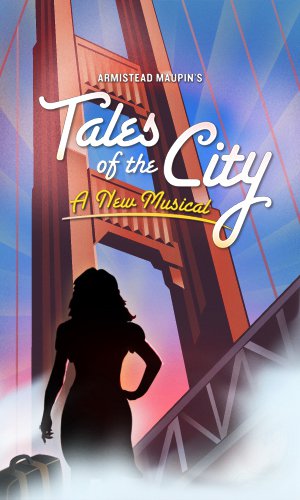
Last Thursday, I had the privilege of seeing the new Tales of the City musical at the American Conservatory Theater in San Francisco. I say “privilege,” even though anyone can buy tickets and go. I guess I had the privilege of not paying for my seat! I really enjoyed the show: it was a little slow to start, but once it picked up, I started to really enjoy the book, the score, and the way a series very dear to me had been translated into a theatrical production. But that last bit proved to be troublesome, too—as with all adaptations, I started to fixate on what was missing.

As I said in my first blog post, I won’t be writing many reviews here, and this post isn’t really a reflection on the quality of Tales of the City. You should go see the show. It’s fun, it’s creative, and it’s one of the gayest, ’70s-est musicals I’ve seen. If my fannish complaints/observations will in any way dissuade you from seeing it, please don’t read the rest of this post. That’s right, I’m giving you express permission to skip something I’ve written. It won’t happen again.

Tales of the City is an interesting choice for a musical. In a lot of ways, it makes sense, but there’s also a ton of ground to cover. The new show incorporates elements of the first book and its sequel, More Tales of the City, cutting out some plot points and characters but still managing to squeeze in a whole lot. And that’s fine: I didn’t expect the musical to go over every detail in the books, because a fuckton happens, you guys. Let’s not forget that Tales of the City and More Tales of the City were previously adapted into TV miniseries. And no one wants to sit through a 10-hour musical.

Still, I couldn’t help but reflect on what was missing. How could I not when I have such a fondness for Armistead Maupin’s novels? And perhaps more distractingly, I kept thinking about what happens next. The first two Tales books are arguably the best, but the story continues long past that. There are four more novels in the series proper and two later installments, including the recently released Mary Ann in Autumn. (Which, incidentally, ties up a loose end from the very first book.) You can’t adapt the first part of a series and not expect fans to start imagining the rest. The musical is very good in its right, but seeing it, my mind was working overtime.

Sitting in the audience, I began to mentally plot out the arcs and trajectories of every character on stage. Maupin’s universe is so dense and intricate that I couldn’t stop myself. (Minor spoiler ahead.) At one point, I remember thinking that DeDe’s daughter Anna (just a fetus in Tales of the City) would eventually grow up and make an appearance in Maupin’s novel The Night Listener, later adapted into a movie with Sandra Oh playing Anna. This is completely irrelevant to the stage adaptation of Tales of the City, but I don’t know how to turn these thoughts off. I wouldn’t say it took away from the show, though I am glad I’ll be seeing it again later this month. Maybe I’ll give myself a light but effective bump on the head first.

If anything dampened my joy, it was knowing where all these characters would end up. (Vague spoilers ahead, so just read the damn books already.) The musical ends on a bittersweet note, but there is a finality to it. You see how these stories could continue, but you’re not exactly left with a cliffhanger. The books, too, are self-contained—though if you’ve read them all, they do start to blur together a bit. Believe it or not, I watched Tales of the City at times with a sense of dread, because I could envision the break-ups and illnesses and deaths to follow. I saw the specters of Jonestown and AIDS, even when they should have been little more than blips on the radar.

And maybe it’s not even about the musical, which is—all things considered—an excellent adaptation of Maupin’s work. It’s the fact that I can never go back and read the books with a clean slate. I know too much already, and that’s kind of a bummer. (For the record, I rarely feel like I know too much about anything, so it’s also a little exciting!) I envy those who can see the Tales of the City musical without knowing how everything will eventually turn out, just as I envy those who can pick up the books and enter that world for the first time. I guess I know what I’d use that Eternal Sunshine technology for if it were suddenly invented.

Yes, I would erase books over a relationship. I’m a pretty cool guy, OK?

This can’t be good

31 May

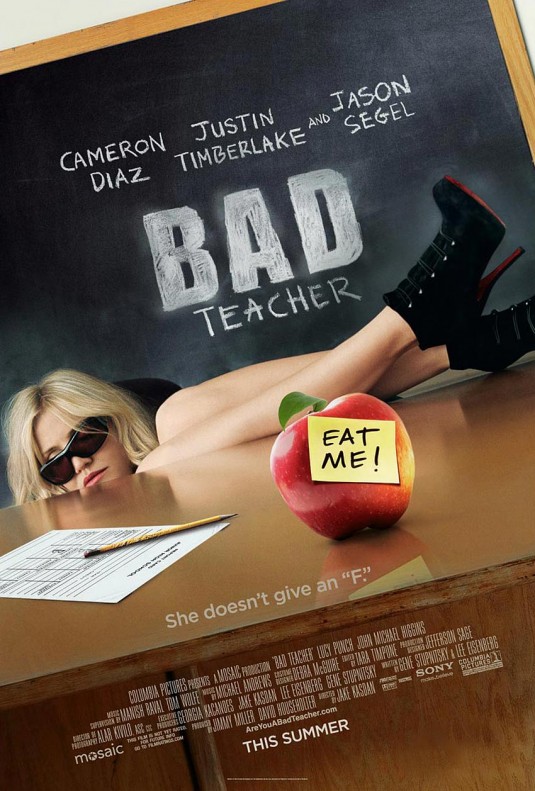
I haven’t seen Bad Teacher yet. “Yet” implies that I’m going to, but that’s still up in the air. I really have no interest in the movie, unless someone manages to talk me into a free screening. I probably wouldn’t review it—I can feel the bias bubbling up in me already—but I could at least find out if my moral indignation is valid.

What is it about Bad Teacher that bugs me? A lot, really. I guess I don’t find our ridiculously flawed educational system to be all that funny. I don’t want to watch Cameron Diaz shit all over an undervalued and underpaid profession. And yeah, the fat kid in me doesn’t need to see my people get ridiculed while playing dodgeball in P.E. class. I lived that already, thanks. Bad Teacher is just in poor taste.

And still I say, so what? I’m not easily offended by anything, especially when it’s done in the name of comedy. No topics are really off limits, as long as they’re funny. So, yes, while I’m especially sensitive to misogyny and homophobia, I have laughed at jokes about women and gay men. People are ridiculous as a whole—if we can’t find something funny to say about our differences, we’re just going to feel super awkward all the time. (As opposed to most of the time, I guess.) I do impose certain limits on myself: I don’t make jokes about rape, for example, because a) I find most of them to be pretty weak, and b) I don’t think I’m a talented enough humorist to pull it off without just being an asshole.

Which means there’s something in particular about Bad Teacher that turns me off. I’ve been sitting here trying to come up with a reasonable explanation, and so far all I’ve got is this: it’s a mainstream Hollywood comedy. Am I being fair? Not really. But the truth is, I would be a lot more open to this film if it were a dark indie flick. At the end of the day, I don’t trust Cameron Diaz, Jason Segel, and Justin Timberlake to star in a true satire, which is what Bad Teacher would need to be to work for me. If the trailers are any indication, this movie is broad—like, really broad—which means more jokes about teachers saying naughty words and less intelligent commentary on a fucked-up institution.

It’s a real shame that I don’t trust a major studio comedy to be edgy without pissing me off, but they haven’t exactly given me a lot to work with. I just assume that the jokes about teachers (and women and queer people) won’t be funny—they’ll offend me not because of their existence, but because they’ve found nothing new to say. Most of these movies find humor in the same stereotypes; after all, that’s what makes the majority of the country laugh. So when I see the trailer for Bad Teacher and sit there all frowny-faced, it’s partly because I think there could be a good comedy somewhere in there. Just because the concept is contentious doesn’t mean it wouldn’t work in more deft hands.

Again, I know it’s not fair to pre-judge. As a movie critic, I should try to put aside my expectations and give even the shittiest-looking films a fair chance. Besides, I could be way off: maybe Bad Teacher is the best comedy of the year. (JK, obviously Bridesmaids.) But while I’d like to believe a big Hollywood comedy can be good, smart, and subversive, I highly doubt Bad Teacher is going to be that movie. Then again, I’m the guy who hated The Hangover—who cares what I think?

Title origins

26 May

I stole my blog title from Parks and Recreation, which is my favorite sitcom currently airing. The original line: “God, why does everything we do have to be cloaked in, like, 15 layers of irony?” It resonated with me the first time I heard it—you can tell because I made it a quote on my Facebook profile, the highest of all honors. But it makes sense to me. I’ve often been frustrated by my inability to do something for the sake of doing it. That sort of thing makes me miss sincerity.

And it’s partly my fault. I’ve embraced a whole lot of terrible because I’m amused by things that are bad. But do I own From Justin to Kelly ironically, or do I genuinely appreciate the trainwreck for what it is? I guess it’s a little of both: I like the movie (on some sick, masochistic level), but I also enjoy the irony of owning something that is most definitely not worth owning. (Related: Last Action Hero on Blu-ray is going for $6 on Amazon. Do I dare?) Perhaps the mere act of owning trash isn’t ironic. On the other hand, praising a movie like Valley of the Dolls as “great” surely is.

But it went past that in college, a time in which I did all sorts of not-that-fun activities because they sounded absurd and I wanted a good story to tell. I remember the first time I went to a frat party, but I can’t remember why. It smelled like cheap beer and cheap weed and B.O. (the consequence of wearing cheap deodorant). I was drinking, because this was before I realized I don’t like drinking or being drunk. And I’m sure I knew at the time that I had no real interest in being at a frat party (or most any parties, for that matter), but I went because it was something to laugh at. You know, a party to attend ironically.

Then there were things I did—and this was likely far more common—that I pretended to be disenfranchised from. And I think that’s why the Parks and Recreation quote really struck me. It’s not so much about doing things ironically as it is about pretending to do things ironically, which is actually way worse. It comes from a fear of genuine enthusiasm, of showing an unhip and unironic appreciation of shit. Like when someone looks at my DVDs and asks, “You own The Simple Life?” I say, “Yeah, I love it.” And he says, “But do you really?” How do I answer that in the affirmative without outing myself as a Paris Hilton fan? It’s less awkward to feign detachment.

I don’t do it as much anymore, since I’m trying to be more honest about my feelings in general. Besides, who cares if I love Paris Hilton? She looks like a bird, and that’s pretty great. But I also feel like doing things under the pretense of irony is a waste of time. I’d rather people know that I’m super into something than have them think I’m a facetious asshole. (I guess I can be both.) With that in mind, I’m not sure the title of this blog is appropriate to what I’m trying to do here, but I like it and I’m going to keep it. Please stop making me feel weird about it.

Incidentally, I stole my header from The Golden Girls, which is my favorite sitcom maybe ever. I never said I was a role model.

Don’t “like” this

23 May

I’m not the first person to note that maybe we need something more than a “like” button on Facebook. There are campaigns for this sort of thing! But I was reminded of how inappropriate it is this morning when a friend of mine posted about the devastation in her hometown of Joplin. And someone (I shit you not!) “liked” it. Not the destruction itself, presumably. Perhaps this was in response to my friend saying that her family is safe and accounted for, or that we should keep the people of Joplin in our thoughts. Still. Does “like” make sense in that context?

You know what would be even worse? A “dislike” button. “Dislike”-ing a status would be just as shallow but with the added offense of mimicking support. I’m horrified by what has happened to Joplin—doesn’t mean I need a button of any kind to express that. I don’t think any of us do. What bothers me about Facebook “like”-ing is that it’s made us lazier than ever. Clicking a button is one of the easiest things you can do, and in nanosecond, you’ve made something resembling a statement.

I’m not advocating for the abolition of the “like” button, because that’s silly. And it definitely has its purpose. If I read a funny status update or see a particularly shitfaced picture, I’m liable to “like” it. On a larger scale, however, I recognize how insipid this is. I’ve seen people on Facebook “like” articles about convicted murders being sentenced to death, break-ups (maybe the relationship was unhealthy?), and job changes. Surely there is more to it than a thumbs up. “Like”-ing is a half-assed way to say, “I saw this. I get it.” How is that ever enough?

It’s not the only lazy thing we do on Facebook. Birthday wall posts are almost as silly, although given how few people remember to actually call on birthdays, I guess they’re better than radio silence. But nothing on Facebook makes me more livid than someone changing his or her status/profile picture for a cause. The term for this is “slacktivism,” and I really wish I’d coined it. (I fucking love portmanteaus.) Again, I’m not reinventing the wheel here, but I think that Facebook slacktivism is more harmful than we give it credit for. It’s not only annoying—it’s damaging to the way we think and act.

I think we all look for easy outs, and “like”-ing a status or changing your profile pic is an all-too-simple way to delude yourself. I know it’s not necessarily a “one or the other deal”—you could change your picture to a cartoon character from your youth to combat child abuse (seriously, what?) and still donate money to the appropriate charities. I just don’t think that’s the norm. There is something so smarmy and self-congratulatory about all of these meaningless acts: “If you really cared about gay marriage, you would change your Facebook status for an hour. I did.” That allows people to take a step back and admire their own “effort.” Give yourself a pat on the back. You ended hatred. I “like” this!

To be fair, the other side of this is texting for disaster relief. Texting is lazy as shit, too—you type some numbers into your phone and bam, money donated. But I can’t really crap on that, because hey, at least you’re doing something. Given that I’m not exactly the most proactive person myself (hold your gasps, assholes), I can appreciate the ability to do something without breaking a sweat. But what you’re doing has to have some value past words, words, words. (He says, as he’s blogging.)

Slacktivism aside, I’m also just bummed at the way “like” has halted so many conversations. And I think it’s ludicrous to suggest that another button would somehow solve that problem. It’s like those news stories with words you can click on the side—is the story “gross” or “sad” or “WTF”? God knows the ability to choose from those hasn’t halted internet commenters, but it’s still so obnoxiously reductive. Why even give people the option of limiting their response to a one-word reaction? As far as I’m concerned, saying nothing at all is preferable to clicking a button.

But while you’re here, feel free to click the “OMG that is SO true” button at the bottom of this page. (Right??)

Not the end

21 May

Last time I wrote about May 21, I admitted that I felt a little bad for those people foolish enough to sell their worldly possessions and await the apocalypse. Today I experienced another twinge of sympathy reading this article about Harold Camping’s disappointed flock. One of the men interviewed for the piece was Keith Bauer, a 36-year-old trucker. “I was hoping,” he said. “I think heaven will be a lot better than this earth.”

What a thing to say. I get down on this planet a lot—well, mostly the people on it—but I can’t imagine thinking we’d be better off after the Second Coming. (In part, because if such an impossible event were to occur, I know I wouldn’t be saved.) But I was sorry for this man, reading his lament, knowing that he’s broken up inside because the world didn’t end. How sad for him, you know?

And then I just felt pissed. Because the paradise Bauer (and all of Camping’s followers) imagine is one in which I don’t exist. We sinners will be tortured and destroyed while the righteous few ascend to a higher plane. Seriously, fuck that. How could I experience even a moment of concern for this man’s feelings? His salvation is at the cost of my existence. I’m part of what makes this world a place to be saved from, and the reason—according to Camping—that God is so livid.

For most of us, for anyone reading this I’d hope, we recognize how backwards that is. As several comedians and Twitter humorists pointed out, we’d be the ones benefiting from a post-Rapture Earth. I don’t want to live alongside anyone who condemns me to eternal damnation. Go ahead and spirit away Camping and all those who spew hate—it wouldn’t solve all of our problems, but it would make day-to-day life a lot less annoying.

I wish the anticlimactic reality of May 21 were enough of a slap in the face to faith-based idiocy. It won’t be. There are always more lunatics on the fringe, and we continue to let their voices be heard. Sure, I’m as guilty as anyone of tweeting jokes about the Rapture and, um, writing Harold Camping-centric blog posts. But in my mind, there’s a difference between mockery/analysis and legitimizing insanity. The news has been reporting on May 21 as if the billboard plastered around the country were anything more than drivel.

All distinctions aside, of course, I’m still perpetuating the conversation, which either makes me a giant hypocrite or completely un-self-aware. So why am I talking about Camping’s Rapture? I guess for the same reason I talk about anything—it got under my skin. I felt something, not fear or dread about the end of the world, but compassion for people with no compassion for me. And I want to smack sense into them. I want these assholes to know that the world is a shitty place because they are part of it.

But I can’t get through to them, even if any did somehow stumble onto this blog: my words to them mean as little as their words to me. We’re forever at odds. Buying all the billboard space in the U.S. wouldn’t change that.